Product Overview
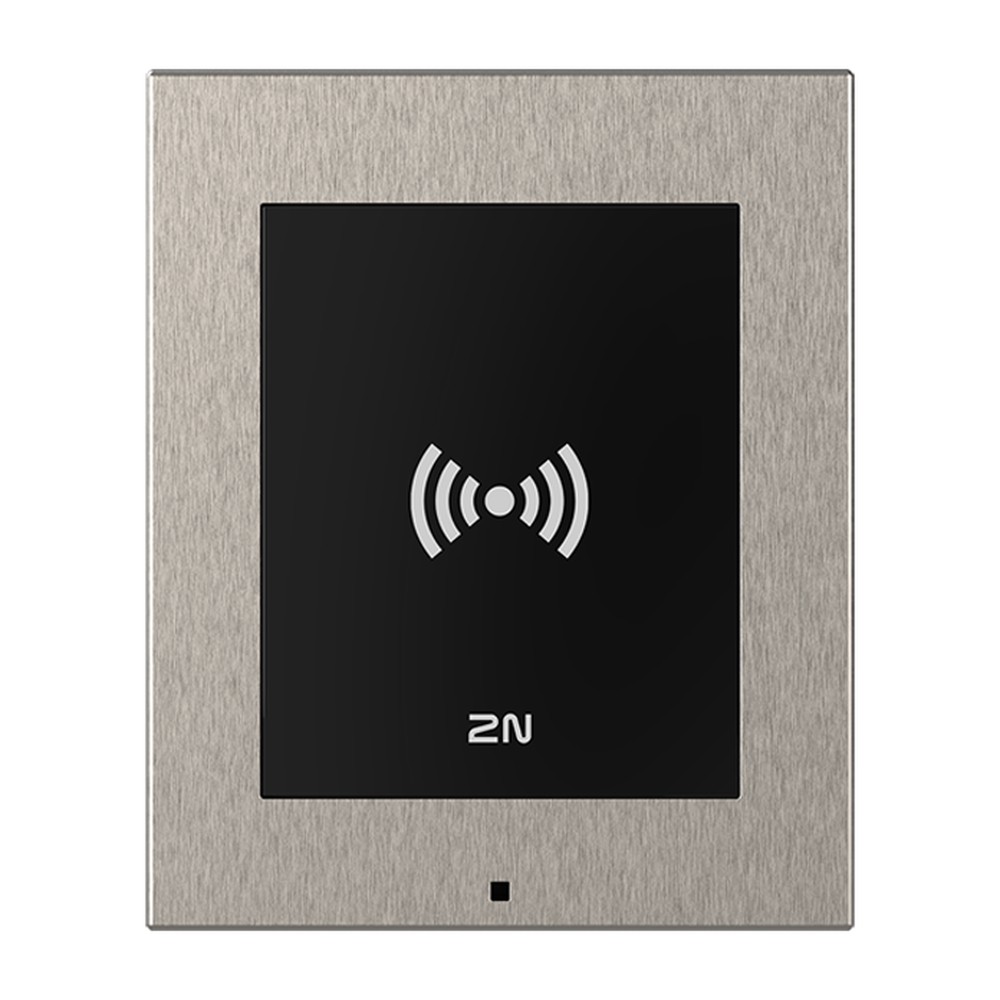
For installers and security integrators managing sites with mixed card credentials, the 2N Access Unit 2.0 RFID Multifrequency consolidates the functions of a traditional door controller and card reader into a single wall-mount unit. Equipped with simultaneous 125 kHz and 13.56 MHz RFID frequency support, this reader handles a broad range of card and fob technologies including HID Prox, MIFARE DESFire, HID iClass, FeliCa, and NFC-based mobile credentials via 2N Mobile Key, eliminating the need to standardise on a single credential format across a site. Featuring a zinc cast frame rated IP54 and IK08, the Access Unit 2.0 is built to handle both semi-outdoor environments and areas prone to physical interference with the reader itself. It draws power via PoE 802.3af or a 12 V DC supply and connects to the network over a standard RJ-45 port. It also supports remote configuration through 2N Remote Configuration cloud service and 2N Access Commander for bulk deployment management, making it a practical choice for multi-door commercial installations.
Key Capabilities
Dual-Frequency RFID Reading
Supports both 125 kHz (EM4xxx, HID Prox) and 13.56 MHz (MIFARE DESFire, HID iClass, FeliCa, NFC) in a single unit. Sites running mixed legacy and modern credentials can operate without replacing existing fobs or issuing new cards site-wide.
Mobile Key NFC Credential Support
Compatible with 2N Mobile Key, allowing authorised users to present a smartphone as their access credential via NFC. This reduces reliance on physical cards and enables credential distribution and revocation remotely without issuing or collecting hardware.
IP54 and IK08 Rated Housing
The zinc cast frame provides IK08 impact resistance against physical tampering attempts at the reader face, while IP54 dust and splash protection makes this suitable for covered external entry points and semi-exposed wall positions, not just sheltered interior doors.
PoE-Powered with Flexible I/O
Accepts PoE 802.3af or 12 V DC, simplifying cable runs to a single Cat-5e network cable. Active and passive switch outputs allow direct control of electric locks, strikes, and magnetic locks, with 2 configurable inputs for door position sensors or exit request buttons.
Secured PICard Card Reading
Beyond reading the card serial number (UID/CSN), the Access Unit 2.0 supports secured MIFARE DESFire reading using 2N PICard technology. This encrypted credential scheme resists cloning attacks, providing stronger access control than UID-only reading for higher-security applications.
Centralised Remote Management
Compatible with 2N Access Commander for bulk configuration and management across multiple doors and sites. The 2N Remote Configuration cloud service enables remote firmware updates and parameter changes without physical access to each unit, reducing ongoing maintenance time for multi-site deployments.
Best For
- Mixed Credential Environments: Sites where staff carry a combination of legacy 125 kHz fobs and modern 13.56 MHz smart cards can present both credential types at the same reader without infrastructure changes.
- Semi-Outdoor Entry Points: The IP54 and IK08 ratings make this suitable for covered building entrances, stairwell access doors, car park entry gates, and other positions exposed to weather splash or opportunistic physical interference.
- Multi-Door Commercial Installations: PoE powering over Cat-5e simplifies cable planning across multiple access points, and 2N Access Commander support allows centralised management without visiting each door individually.
- High-Security Card Applications: Organisations requiring encrypted card verification rather than simple UID reading benefit from confirmed MIFARE DESFire and 2N PICard secured credential support, reducing the risk of card cloning at critical access points.
Why Choose the 2N Access Unit 2.0 RFID Multifrequency
Where a single-frequency reader forces a site to standardise entirely on one card technology, the 2N Access Unit 2.0 RFID Multifrequency handles both 125 kHz legacy and 13.56 MHz modern credentials simultaneously, preserving existing fob investments while allowing migration to newer, more secure card formats over time. The confirmed IK08 impact rating and zinc cast construction mean the reader face itself resists physical attack attempts, an important consideration for public-facing or unsupervised access points. Active switch outputs at 8-12 V DC up to 600 mA, combined with passive NO/NC contacts, provide the flexibility to control a wide range of door hardware directly without additional relay modules. With NFC mobile credential support via 2N Mobile Key and encrypted PICard-secured reading for MIFARE DESFire, this unit suits access control deployments where security depth matters. Available through Security Wholesalers, the 2N Access Unit 2.0 is a practical upgrade over basic proximity readers for integrators building serious IP access control systems.
Buyer Decision Tips
Buyer Tip – Credential Compatibility: Before specifying this unit, confirm which card technologies are already in use on site. If the site runs only a single low-security EM4xxx or HID Prox format with no plans to introduce 13.56 MHz credentials, a simpler single-frequency reader may reduce cost without compromising the installation. The multifrequency capability of this unit delivers real value when multiple credential types are present, when a staged migration from legacy to secure cards is planned, or when NFC mobile key access is part of the brief.
Buyer Tip – Network and PoE Infrastructure: The Access Unit 2.0 connects via RJ-45 and draws power from PoE 802.3af. Confirm that the nearest network switch port is PoE-capable and that Cat-5e or better cable can be run to each door position before quoting. The unit also accepts 12 V DC as an alternative power source, which can be useful where PoE switching is not available at a specific location.
Key Features & Technical Specifications
| Brand |
Axis Communications (2N) |
| Product Type |
IP Access Control Unit with Multifrequency RFID Reader |
| Form Factor |
Wall-mount |
| Frame Material |
Zinc cast with nickel and black surface finish |
| Supported RFID Frequencies |
125 kHz and 13.56 MHz |
| 125 kHz Protocols |
EM4xxx, HID Prox |
| 13.56 MHz Protocols |
ISO14443A (MIFARE DESFire), PicoPass (HID iClass), FeliCa, ST SR(IX), NFC (2N Mobile Key), HID SE (Seos, iClass, MIFARE SE) |
| Secured Card Reading |
UID (CSN) and secured MIFARE DESFire via 2N PICard technology |
| IP Rating |
IP54 |
| IK Rating |
IK08 |
| Power Supply |
PoE 802.3af (Class 0, up to 12.95 W) and/or 12 V/1 A DC |
| Network Interface |
10/100BASE-TX, Auto-MDIX, RJ-45 |
| Recommended Cabling |
Cat-5e or better |
| Active Switch Output |
8-12 V DC, max 600 mA |
| Passive Switch Output |
NO/NC contacts, up to 30 V/1 A AC/DC |
| Inputs |
2 inputs (passive/active mode) |
| Buzzer |
97 dBA |
| Supported Protocols |
DHCP, SMTP, TFTP, HTTP, HTTPS, Syslog |
| Remote Management |
2N Remote Configuration cloud service, 2N Access Commander |
| Operating Temperature |
-40°F to +140°F |
| Storage Temperature |
-40°F to +158°F |
| Dimensions (D x H x W) |
2.8 cm x 13 cm x 10.7 cm |
| Weight |
800 g |
| Country of Origin |
Czech Republic |
Ideal Use Cases
Commercial Building Main Entries
The IP54 rating and IK08-rated zinc cast housing suit exposed or semi-exposed entry points where the reader face must resist both weather splash and deliberate impact, while PoE powering simplifies the single cable run from the nearest network switch.
Multi-Tenant Office Environments
Where different tenants carry different card brands (HID Prox, MIFARE, iClass), the dual-frequency reader accepts all without requiring card re-issuance. 2N Access Commander allows access rights to be managed per tenant group from a central interface.
Server Rooms and Secure Areas
Organisations requiring encrypted credential verification rather than simple card serial number reading can use secured MIFARE DESFire cards with 2N PICard technology, reducing the risk of cloned card attacks at the door to high-value or sensitive areas.
Education and Healthcare Campuses
Large campuses with many access points benefit from centralised management via 2N Access Commander and remote firmware updates through the 2N Remote Configuration cloud service, reducing the labour involved in keeping multiple readers updated and consistently configured.
Sites Transitioning from Legacy to Smart Cards
The simultaneous 125 kHz and 13.56 MHz support allows a phased migration where old HID Prox fobs continue working alongside newly issued MIFARE DESFire cards during transition, without swapping readers mid-project or leaving any staff locked out.
Choosing the Right Model
- Choose this model if: The site uses or plans to use more than one RFID credential technology, requires encrypted MIFARE DESFire card reading with PICard security, needs NFC mobile key support, or involves semi-outdoor mounting where IP54 and IK08 ratings are necessary.
- Choose a different model if: The installation is entirely indoor with no risk of moisture exposure, uses only a single legacy credential format with no planned migration, and cost sensitivity makes a basic single-frequency proximity reader the more appropriate fit for the access tier being secured.
- Choose this model if: The project involves multiple doors managed centrally, since PoE powering over Cat-5e and compatibility with 2N Access Commander reduce both installation complexity and ongoing management overhead across the site.
- Choose a different model if: The access point requires a keypad or biometric reader as the sole credential method rather than card-based access, as this unit is specifically designed around RFID and NFC credential reading.
FAQs
- Can the Access Unit 2.0 read both old HID Prox fobs and newer MIFARE DESFire cards at the same door?
Yes. The confirmed 125 kHz support covers HID Prox, and the 13.56 MHz frequency covers MIFARE DESFire. Both frequencies are active simultaneously, so a site can operate legacy 125 kHz fobs alongside 13.56 MHz smart cards at the same reader without any configuration change required when staff present either credential type.
- What does 2N PICard technology add compared to standard UID card reading?
Standard UID (CSN) reading simply reads the card’s serial number, which can be cloned using widely available tools. 2N PICard reads secured application data encrypted on MIFARE DESFire cards, meaning the credential cannot be duplicated by copying the UID alone. This is recommended for access points where the security of the credential itself matters, such as server rooms or restricted zones.
- Does the Access Unit 2.0 need a separate door controller, or is the controller built in?
The Access Unit 2.0 combines the functions of a door controller and RFID reader in a single wall-mount unit. It includes active switch outputs (8-12 V DC, up to 600 mA) and passive NO/NC contacts to control door hardware directly, plus 2 configurable inputs for sensors or exit request devices, so a separate controller box is not required for standard single-door configurations.
- What PoE standard does this unit require, and does it work from any PoE switch port?
The Access Unit 2.0 operates on PoE 802.3af (Class 0, up to 12.95 W). This is the most common PoE standard and is supported by virtually all modern PoE switches and PoE injectors. It will also accept 12 V/1 A DC as an alternative power source where PoE is not available at the door location.
- Is this reader suitable for outdoor installation in Australian conditions?
The confirmed IP54 rating provides protection against dust ingress and water splash from any direction, making it appropriate for covered outdoor positions such as building portico entries, undercover car park access points, or sheltered external walls. It is not rated for direct rain exposure without overhead cover. The confirmed operating temperature range of -40°F to +140°F covers Australian climate extremes without issue.
- How is the Access Unit 2.0 managed across a multi-door site?
The unit is compatible with 2N Access Commander, which provides centralised access control management including user provisioning, access scheduling, event logging, and bulk configuration across multiple doors. Remote firmware updates and parameter changes are also supported via the 2N Remote Configuration cloud service, reducing the need for physical access to each reader for routine maintenance. This makes it practical for deployments covering 10 or more doors across one or multiple sites. The 2N Access Unit 2.0 RFID Multifrequency is available through Security Wholesalers for integrators building out 2N-based access control systems.
- Can a smartphone be used as an access credential with this reader?
Yes. The Access Unit 2.0 supports NFC-based mobile credentials via 2N Mobile Key. This allows authorised users to use a compatible smartphone in place of a physical card or fob. Mobile credentials can be issued and revoked remotely through the 2N management platform, which is useful for managing temporary access or rapidly removing credentials for departed staff without collecting a physical card.
Cabling Considerations
- Cable Type: Cat-5e or better is the manufacturer-recommended cabling for both network connectivity and PoE power delivery to this unit.
- Maximum Cable Run: Standard PoE maximum cable run is 100 m from the PoE switch port to the reader. Keep cable runs within this limit to maintain reliable power delivery and network performance.
- PoE Considerations: The unit requires PoE 802.3af (Class 0). Confirm the supplying switch port is PoE-capable and can deliver at least 12.95 W per port. Where a PoE switch is not accessible near the door, a mid-span PoE injector can be used to add PoE to a standard network cable run.
- Door Hardware Wiring: The active switch output (8-12 V DC, max 600 mA) is suitable for direct connection to low-power electric locks or strikes. For magnetic locks or higher-current hardware, use the passive NO/NC switch output (up to 30 V/1 A AC/DC) with an appropriately rated external power supply for the lock. Run door hardware cabling in a separate conduit or cable path from the network cable where possible to avoid interference.
- Input Wiring: The 2 configurable inputs (passive/active mode) can be connected to door position sensors or exit request (request-to-exit) buttons. Use screened cable for input wiring runs in environments with electrical noise from motors or industrial equipment.