Product Overview
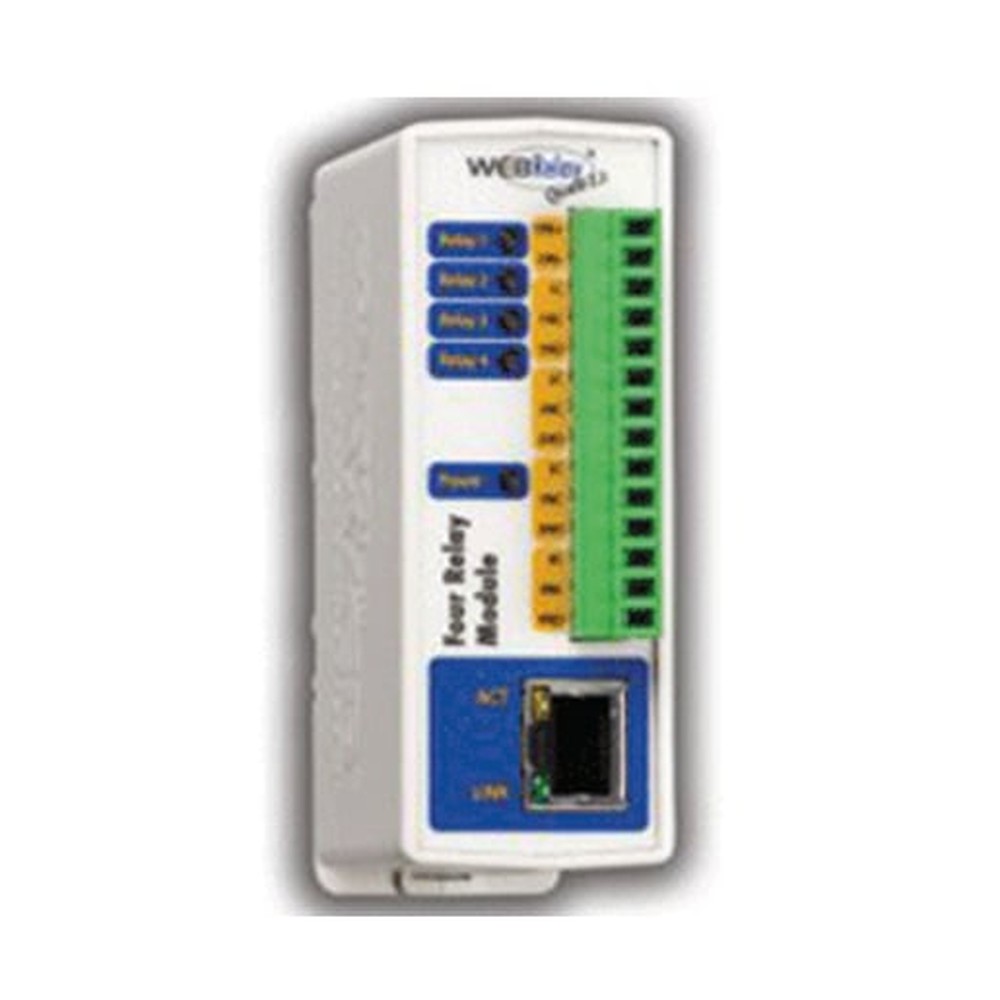
For integrators and system designers who need reliable, software-free relay control over a network, the 2N Axis WebRelay-Quad delivers 4 independent SPDT relay outputs in a compact DIN-rail or wall-mount enclosure. Each relay supports 28VAC or 24VDC at up to 3 amps, making this module well suited to controlling electric locks, door strikes, gate controllers, sirens, and other switched loads commonly found in access control and building automation installations. Equipped with a built-in web server, the WebRelay-Quad requires no proprietary software or device drivers to configure or operate remotely. Control is handled directly through a standard web browser, with XML status and control pages available for custom software integration. It also operates as a Modbus TCP/IP slave device, supporting SCADA and building management system environments. Powered by PoE (IEEE 802.3af), 9-28VDC, or 5VDC, it adapts cleanly to most existing infrastructure.
Key Capabilities
4 Independent SPDT Relay Outputs
Each of the 4 relay channels operates independently at 28VAC or 24VDC with a 3-amp rating. This allows simultaneous control of separate loads such as an electric lock, gate motor, alarm output, and auxiliary device from a single module.
Built-In Web Server – No Software Required
Configuration and live relay control are handled entirely through a web browser. There are no device drivers or dedicated software packages to install, reducing commissioning time and simplifying remote management for installers and IT teams alike.
XML Integration and Modbus TCP/IP Support
XML status and control pages allow custom software, access control platforms, or building management systems to interact with relay states programmatically. Modbus TCP/IP slave mode extends compatibility with SCADA and industrial automation environments.
Flexible PoE and Multi-Voltage Power Options
The module accepts power via PoE (IEEE 802.3af), 9-28VDC, or 5VDC, allowing it to draw directly from an existing PoE switch without requiring a separate power supply. This simplifies DIN-rail panel design and reduces cabling overhead.
DIN-Rail and Wall-Mount Form Factor
The compact polycarbonate enclosure (3.9″ H x 1.4″ W x 3.1″ D) is designed for standard DIN-rail installation inside electrical panels or enclosures, keeping relay wiring organised and the installation tidy. Wall mounting is also supported where panel space is limited.
Best For
- Access Control Integration: Controls electric door strikes, mag-locks, or gate operators using the 4 independent SPDT relays rated at 3A, 28VAC/24VDC, without requiring a dedicated access control panel to manage relay outputs.
- IP-Based Remote Switching: Enables web browser-based relay control over any IP network, making it suited to sites where operators need to trigger outputs remotely without being on-site.
- Building Automation and SCADA Systems: Modbus TCP/IP slave mode allows the module to integrate into industrial or building management platforms for automated scheduling or event-driven switching.
- Panel-Based DIN-Rail Installations: The slim DIN-rail profile and 14-pin industrial terminal connector make this module practical inside switchboard enclosures where space and neatness are priorities.
Why Choose the 2N Axis WebRelay-Quad
The WebRelay-Quad stands apart from basic relay boards by combining 4 independently controllable SPDT outputs with a fully self-contained web server, eliminating the need for any third-party software stack on the controlling device. A lower-cost relay board may require a dedicated controller or software gateway to operate over a network, while the WebRelay-Quad handles all network communication internally using standard HTTP and XML. Its Modbus TCP/IP slave capability makes it a genuinely useful node in SCADA or BMS-integrated buildings without additional middleware. The wide power input range, including IEEE 802.3af PoE, means it can be deployed cleanly alongside IP cameras and access readers on a shared PoE switch. The polycarbonate DIN-rail housing and industrial terminal block suit permanent panel installations. Available through Security Wholesalers, the 2N Axis WebRelay-Quad suits integrators working across access control, building automation, and networked switching projects.
Buyer Decision Tips
Relay Load Matching: Each relay output is rated at 3A and supports 28VAC or 24VDC loads. Before specifying this module, confirm the draw of each device being controlled (door strike, gate motor, siren) does not exceed 3A per channel. For higher-current loads, a separate contactor or relay driver stage will be needed between the WebRelay-Quad output and the load.
Network Access for Browser Control: Because the WebRelay-Quad is managed through a web browser over the LAN or WAN, the device must be assigned a static IP or reserved DHCP address to ensure the browser interface and any XML integration remain accessible at a consistent address. Plan IP address management during system design, particularly on larger sites with multiple modules.
Key Features & Technical Specifications
| Brand |
Axis Communications (2N sub-brand) |
| Product Type |
4-Channel IP Relay Module (WebRelay-Quad) |
| Relay Outputs |
4 independent SPDT relay channels |
| Relay Rating |
3A at 28VAC or 24VDC per channel |
| Relay Modes |
On/Off and Pulse modes |
| Discrete Inputs |
None (outputs only) |
| Control Interface |
Built-in web server – browser-based control, no software required |
| Integration |
XML status and control pages; Modbus TCP/IP slave device |
| Network Interface |
1 x RJ-45, 10/100 Base-T Ethernet |
| Power Supply Options |
PoE (IEEE 802.3af), 9-28VDC, or 5VDC |
| Connector |
14-pin industrial terminal connector |
| Mounting |
DIN-rail or wall mount |
| Operating Temperature |
-40°F to 135°F (-40°C to approx. 57°C) |
| Dimensions |
3.9″ H x 1.4″ W x 3.1″ D |
| Weight |
0.31 lb |
| Enclosure Material |
Polycarbonate (PC) |
| Country of Origin |
United States |
| SKU |
01398-001 |
Ideal Use Cases
Electric Lock and Door Strike Control
Each SPDT relay at 3A, 28VAC/24VDC is directly compatible with common electric door strikes and mag-locks. Up to 4 access points can be controlled from a single WebRelay-Quad module over the network, reducing hardware cost and panel complexity.
Gate and Barrier Integration
The relay outputs can trigger gate motors, boom barriers, and turnstiles directly or via auxiliary control inputs. Browser-based or XML-triggered control allows operators to open barriers remotely from any networked device.
SCADA and Building Automation
Modbus TCP/IP slave mode allows the WebRelay-Quad to integrate directly into industrial SCADA systems and building management platforms, enabling automated or event-driven relay switching without custom gateway hardware.
Remote Switching Over LAN or WAN
The built-in web server means any authorised user with network access can toggle or pulse relays from a standard browser. This is useful for remote sites where a technician needs to cycle a device or release a lock without travelling to the location.
Electrical Panel and DIN-Rail Installations
The slim 1.4″-wide DIN-rail polycarbonate enclosure and 14-pin industrial terminal block make this module a tidy fit inside switchboard enclosures on commercial or industrial sites, keeping relay switching neatly contained within existing panel infrastructure.
Choosing the Right Model
- Choose this model if: You need 4 independently controlled IP relay outputs on a single DIN-rail module, powered by PoE, with no requirement for dedicated software – particularly where Modbus TCP/IP or XML integration with a BMS or access platform is required.
- Choose a different model if: Your application requires discrete inputs as well as outputs – the WebRelay-Quad provides outputs only. If you need a module that also monitors door contacts, motion triggers, or other digital input signals, look for an IP relay module that includes input channels alongside relay outputs.
- Choose a different model if: Your switched loads exceed 3A per channel or require higher AC voltage ratings. In that case, the WebRelay-Quad relay outputs would need to drive intermediate contactors rather than the load directly, which may add cost and complexity better resolved by a higher-rated relay module.
FAQs
- Does the WebRelay-Quad require any software to be installed on a PC or server to operate?
No. The module includes a built-in web server that is accessible directly through a standard web browser on any networked device. There are no proprietary software packages, device drivers, or middleware required. Configuration and relay control are performed entirely through the browser interface once the module is assigned a network address.
- Can this module be controlled by a third-party access control or building management system?
Yes. The WebRelay-Quad provides XML status and control pages that allow external software systems to read relay states and trigger outputs using standard HTTP requests. It also supports Modbus TCP/IP slave mode, which is compatible with SCADA platforms and many building automation systems that communicate via Modbus over Ethernet.
- What is the relay contact rating, and is it suitable for controlling electric door strikes directly?
Each of the 4 SPDT relays is rated at 3 amps at 28VAC or 24VDC. Many electric door strikes and mag-locks operate within this range, but you should verify the current draw of your specific lock hardware before wiring it directly to a relay output. Loads that exceed 3A will require an intermediate contactor.
- How is the WebRelay-Quad powered on a DIN-rail installation?
It accepts power via PoE (IEEE 802.3af), 9-28VDC, or 5VDC. In a DIN-rail panel where a PoE switch is already present, the module can draw power directly over the network cable, eliminating the need for a separate DC power supply in the enclosure. Alternatively, 9-28VDC from an existing panel supply can be used.
- Does the module support pulsed relay operation for triggering momentary loads such as door releases?
Yes. Each relay channel supports both On/Off mode for latching control and Pulse mode for momentary switching. Pulse mode is specifically suited to electric door strikes and gate release inputs that require a timed contact closure rather than a sustained switched state.
- Is the WebRelay-Quad available through Security Wholesalers, and is it suited to Australian installation environments?
Yes, this module is part of the Security Wholesalers range. It is manufactured in the US under the Axis Communications (2N) brand. The confirmed operating temperature range of -40°F to 135°F (-40°C to approximately 57°C) covers Australian ambient conditions in both panel and outdoor enclosure scenarios, though the housing itself is rated for indoor or enclosed mounting rather than direct external exposure.
Cabling Considerations
- Network Cable: Use Cat5e or Cat6 cable for the RJ-45 10/100 Base-T Ethernet connection. If powering via PoE (IEEE 802.3af), ensure the cable run from the PoE switch does not exceed 100 metres to maintain reliable power delivery and network performance.
- Relay Output Wiring: Relay outputs are terminated via the 14-pin industrial terminal connector. Use appropriately rated cable for the switched load voltage and current – minimum 1.0mm2 conductor cross-section is recommended for loads approaching the 3A relay rating at 24VDC or 28VAC.
- PoE Considerations: Maximum PoE cable run is 100 metres per IEEE 802.3af standard. Use a PoE switch or injector confirmed to deliver Class 1 or Class 2 power output. Passive PoE injectors should not be used unless their voltage output is confirmed compatible with the module’s input range.
- Wiring Tips: Separate low-voltage control wiring from relay output wiring within the panel to avoid induced interference on the network or control lines. Where relay outputs switch inductive loads such as gate motor coils or solenoid locks, install a suppression diode or varistor across the load to protect relay contacts from back-EMF.