













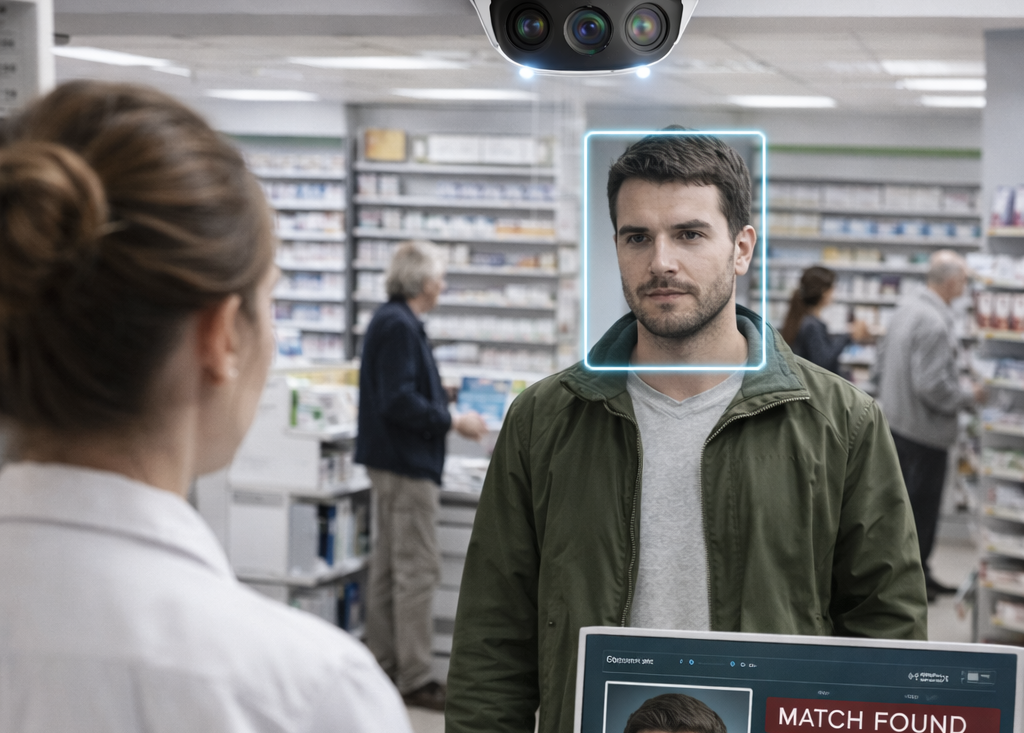
Facial Recognition in Retail: A Practical Hikvision VPro + DeepinView Solution for Pharmacies Leave a comment
Following the recent Australian tribunal decision confirming Bunnings was entitled to use facial recognition technology for loss prevention and staff safety, many retailers are now asking a more practical question:
How can facial recognition be deployed sensibly, affordably, and responsibly in a real store?
For most retail environments — especially chemists and pharmacies — the answer is not to install facial capture cameras everywhere. Instead, the most effective approach is targeted intelligence, using advanced AI cameras only at key interaction points, supported by a capable AI recorder.
This article outlines a real-world Hikvision solution using:
-
Hikvision VPro-series NVRs
-
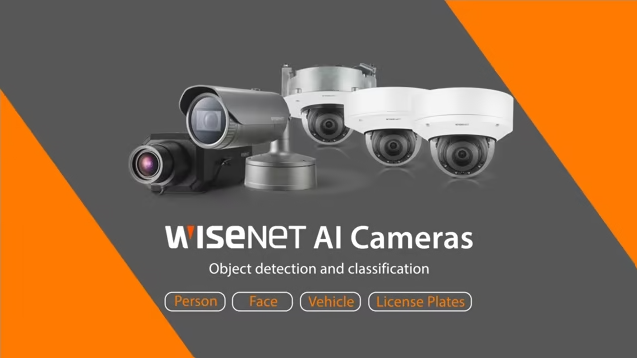
Hikvision DeepinView AI cameras
-
A chemist case study with facial capture limited to entrances and the counter
Why Chemists Are Ideal Candidates for Targeted Facial Recognition
Chemists face a unique mix of risks:
-
Repeat theft of small, high-value items
-
Aggression or intimidation toward counter staff
-
Offenders returning multiple times across weeks or months
-
High customer throughput at predictable entry points
At the same time, chemists do not need full-store biometric coverage. A targeted system provides:
-
Strong deterrence
-
Early warning of known repeat offenders
-
Better staff protection
-
Lower system cost
-
Reduced privacy exposure
System Architecture Overview
Core Design Principle
Use AI facial capture only where faces naturally present themselves clearly, and rely on the NVR to manage intelligence, matching, and alerts.
For this deployment:
-
Facial recognition cameras are installed at each entrance and at the service counter
-
Standard cameras monitor aisles and general store activity
-
All intelligence is handled centrally by a VPro-series NVR
The Brain of the System: Hikvision VPro-Series NVR
The Hikvision VPro-series NVR acts as the intelligence hub for the entire solution.
Key Capabilities Relevant to Facial Recognition
-
Centralised facial database management
-
Support for multiple face libraries (e.g. persons of interest, staff, whitelist)
-
Facial comparison and confidence scoring
-
Event-based alerts when matches occur
-
Intelligent video search tools such as AcuSearch and AcuSeek
-
High-bandwidth handling for AI camera streams
-
Long-term indexed storage of face events
Unlike entry-level NVRs, VPro models are designed not just to record video, but to analyse, index, and retrieve intelligence efficiently.
This is critical in retail environments where incidents are often reviewed days or weeks later.
Cameras: Hikvision DeepinView AI for Face Capture
Facial recognition performance depends heavily on camera quality. For this reason, DeepinView AI cameras are used only at locations where facial detail matters.
DeepinView cameras offer:
-
Dedicated AI processors
-
High-resolution sensors
-
Optimised facial capture algorithms
-
Accurate detection even with glasses, hats, or varying lighting
Recommended Camera Placement in a Chemist
1. Main Public Entrance
A DeepinView AI bullet or dome camera is installed above or just inside the main entrance.
Purpose:
-
Capture clear, front-on facial images as customers enter
-
Detect known repeat offenders early
-
Trigger alerts before staff interaction occurs
Why this works:
People naturally walk toward the camera at entrances, creating ideal conditions for accurate face capture.
2. Secondary or Side Entrance
Many chemists have a second access point (side door, centre access, or after-hours entry).
Purpose:
-
Capture faces entering or exiting from less visible access points
-
Provide additional reference angles for investigations
-
Reduce blind spots where offenders may attempt to avoid detection
This camera typically covers a narrower field of view, optimised for facial clarity rather than wide coverage.
3. Service Counter (High-Risk Interaction Zone)
A DeepinView dome camera is positioned above or slightly behind the counter, facing customers.
Purpose:
-
Capture high-quality facial images during staff interactions
-
Protect staff during confrontational situations
-
Associate facial data with theft, threats, or abuse incidents
This location consistently produces the clearest facial captures because customers pause, face staff, and remain in frame longer.
How the Facial Recognition Workflow Operates
Step 1: Face Detection
DeepinView cameras continuously analyse video streams and detect human faces that meet quality thresholds (size, angle, clarity).
Step 2: Face Capture and Encoding
When a suitable face is detected:
-
The camera extracts key facial features
-
A biometric template is generated
-
The face capture is sent to the VPro NVR
Step 3: Database Comparison
The VPro NVR compares the captured face against stored libraries, which may include:
-
Known repeat offenders
-
Previously identified persons of interest
-
Staff or approved individuals
Matching occurs only when confidence thresholds are met.
Step 4: Event Alerts
If a match occurs:
-
The NVR generates a real-time alert
-
The event is logged and timestamped
-
Management or security staff can be notified
-
The associated video clip is instantly accessible
This allows proactive response, rather than discovering incidents after loss has already occurred.
Why the Rest of the Store Does Not Need Facial Capture Cameras
A common mistake is attempting to deploy facial recognition across every aisle. This adds cost and complexity with little benefit.
In a chemist:
-
Aisle cameras are better suited for general activity monitoring
-
Facial capture quality is often poor due to angles and distance
-
Intelligence value is highest at controlled choke points
Using standard fixed cameras in the rest of the store provides:
-
Full situational awareness
-
Incident review capability
-
Lower overall system cost
Privacy-First Design by Limiting Capture Zones
By restricting facial recognition to:
-
Entrances
-
Counter interaction points
the system:
-
Minimises biometric data collection
-
Simplifies compliance obligations
-
Reduces customer concern
-
Aligns with proportional-use principles highlighted in recent legal decisions
Clear signage and documented policies remain essential, but targeted deployment significantly lowers risk.
Benefits to the Chemist
✔ Early identification of repeat offenders
✔ Improved staff safety at the counter
✔ Faster incident investigation
✔ Reduced false alerts compared to motion-based systems
✔ Scalable system that can expand if needed
Conclusion
A Hikvision solution combining VPro-series AI NVRs with DeepinView facial capture cameras delivers a balanced, practical facial recognition system for chemists and pharmacies.
Rather than over-deploying expensive AI cameras, this approach focuses intelligence where it matters most — at entrances and staff interaction points — while still providing full-store CCTV coverage.
It reflects the direction Australian retail security is moving: targeted, intelligent, and proportionate use of AI, rather than blanket surveillance.