
















-
×
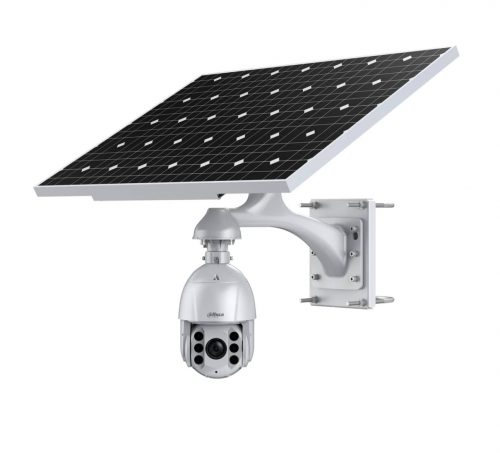 DAHUA 120W PTZ Integrated solar monitoring kit Supplied with 4G camera with Wizsense and solar panel
1 × $4,150.00
DAHUA 120W PTZ Integrated solar monitoring kit Supplied with 4G camera with Wizsense and solar panel
1 × $4,150.00
Subtotal: $4,150.00
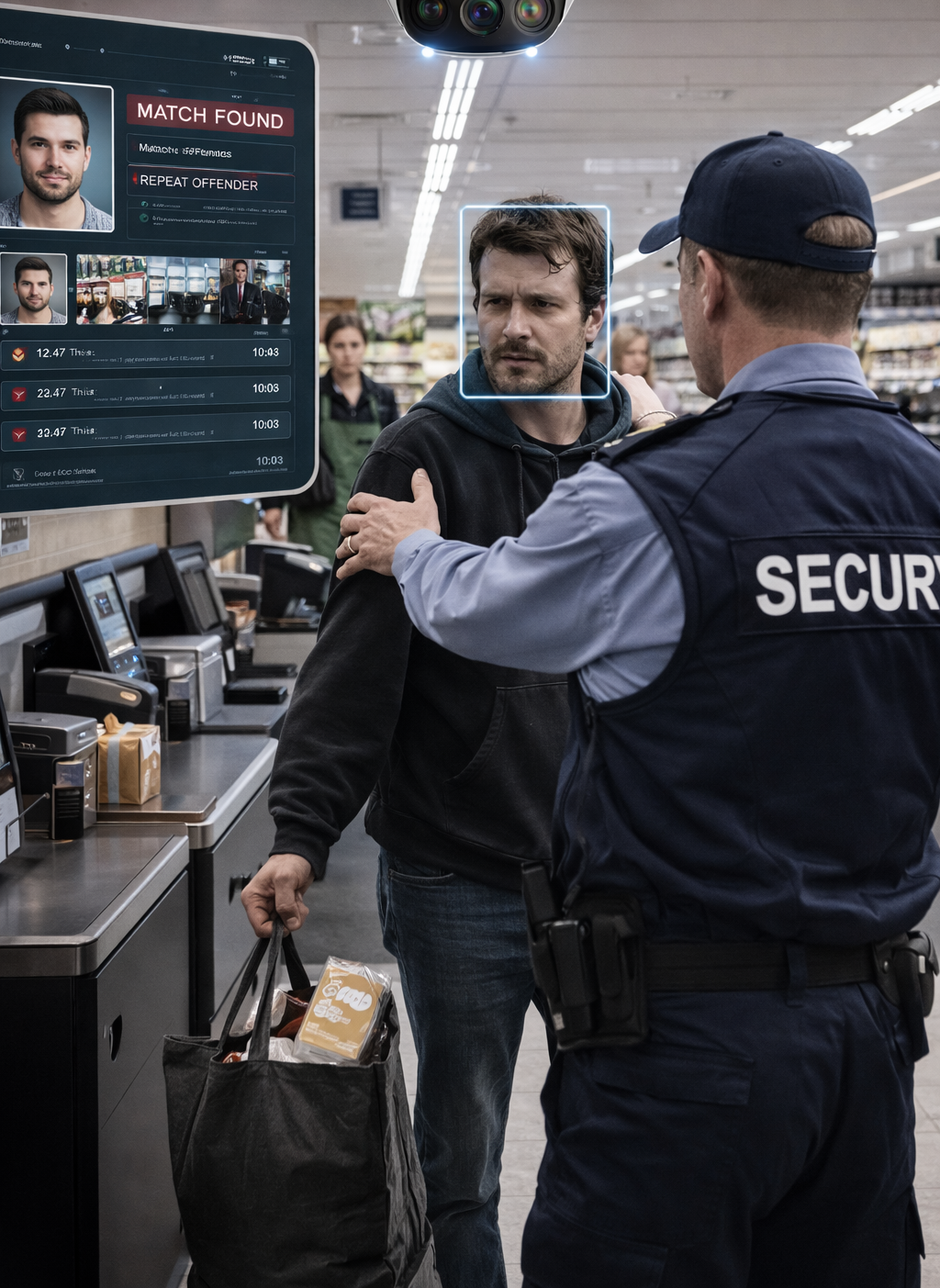
In February 2026, Australian retailer Bunnings secured a significant legal win confirming its right to use facial recognition technology in stores for crime prevention and staff safety purposes. The ruling acknowledged that, when deployed with appropriate safeguards, facial recognition can be a proportionate and effective tool to address repeat offending, violent behaviour, and organised retail crime.
While privacy regulators have emphasised the need for transparency and strong governance, the decision provides clarity for businesses considering advanced CCTV solutions that go beyond passive recording and move into real-time intelligence and alerting.
This development highlights a broader shift in the security industry: CCTV systems are no longer just about watching footage after an incident — they are about preventing incidents before they escalate.
Facial recognition systems combine high-performance cameras with AI-enabled recorders to detect, analyse, and compare faces in real time. Unlike traditional motion-based CCTV, these systems focus specifically on human facial features.
Cameras are installed at strategic points such as:
Main entrances and exits
Internal bottlenecks and walkways
Service counters or high-risk zones
These cameras are positioned so faces are captured at an optimal height and angle as people naturally walk toward them. The system continuously scans video frames to detect the presence of a human face.
Once a face is detected, the system analyses unique biometric features such as:
Eye spacing and alignment
Nose and jawline structure
Facial contours and proportions
These characteristics are converted into a mathematical template (often referred to as a facial signature). Importantly, the system is analysing patterns — not simply storing raw images like standard video recording.
The facial template is compared against a database stored within the NVR. This database can include:
Known repeat offenders
Persons of interest
Staff or authorised personnel
Whitelisted individuals (optional)
If a match meets a predefined confidence threshold, the system triggers an event.
When a recognition event occurs:
Alerts can be sent to authorised staff
Events appear instantly on the NVR dashboard
Notifications can be pushed to mobile devices
Additional actions can be triggered (such as flagging footage, activating intercoms, or escalating to security teams)
This allows staff to respond proactively rather than reactively.
Accurate facial recognition depends heavily on correct design and installation:
Mounting height: Typically between 1.8 m and 2.2 m
Angle: Faces should approach the camera front-on rather than from sharp side angles
Lighting: Even, consistent lighting dramatically improves accuracy
Resolution: Higher resolution cameras capture more facial detail and reduce false matches
Purpose-built face capture cameras outperform general-purpose cameras in these scenarios.
Below are proven solution paths using enterprise-grade platforms from Hikvision and Dahua, both widely deployed in commercial environments.
Cameras
DeepinView AI cameras designed specifically for face capture
High-resolution sensors with advanced image processing
Optimised for entrances and controlled access points
NVR
Support for large facial databases
Real-time matching, alarms, and audit logs
This architecture allows facial data to be processed centrally, with cameras focused on capture quality and the NVR handling intelligence and alerting.
Cameras
Designed for high-accuracy facial detection and capture
Available in multiple form factors and resolutions
NVR
Event-based alerting and search functionality
Integration with broader security workflows
Dahua systems are well suited to environments that require scalable analytics and centralised management.
Facial recognition systems:
✔ Detect and compare faces against predefined databases
✔ Alert authorised personnel in real time
✔ Assist with loss prevention and staff safety
They are not mass surveillance tools scraping identities indiscriminately. When deployed correctly, data handling rules and retention policies strictly limit how facial data is stored and used.
The Bunnings decision reinforces an important principle: technology alone is not enough. Responsible deployment requires:
Clear signage advising customers of advanced CCTV use
Defined policies outlining purpose, retention, and access
Limiting facial databases to legitimate operational needs
Ensuring only authorised staff can view or manage facial data
Facial recognition should always be implemented as part of a documented risk-management and safety strategy.
The recent tribunal decision involving Bunnings marks a turning point for Australian retail security. It confirms that facial recognition technology, when used proportionately and transparently, can be a legitimate and effective tool for preventing repeat crime and protecting staff.
Modern CCTV platforms from Hikvision and Dahua now allow businesses to move from passive recording to intelligent, event-driven security — delivering faster responses, stronger deterrence, and safer environments.
For organisations seeking a future-ready security solution, facial recognition is no longer theoretical — it is deployable, proven, and increasingly relevant.